Research Projects
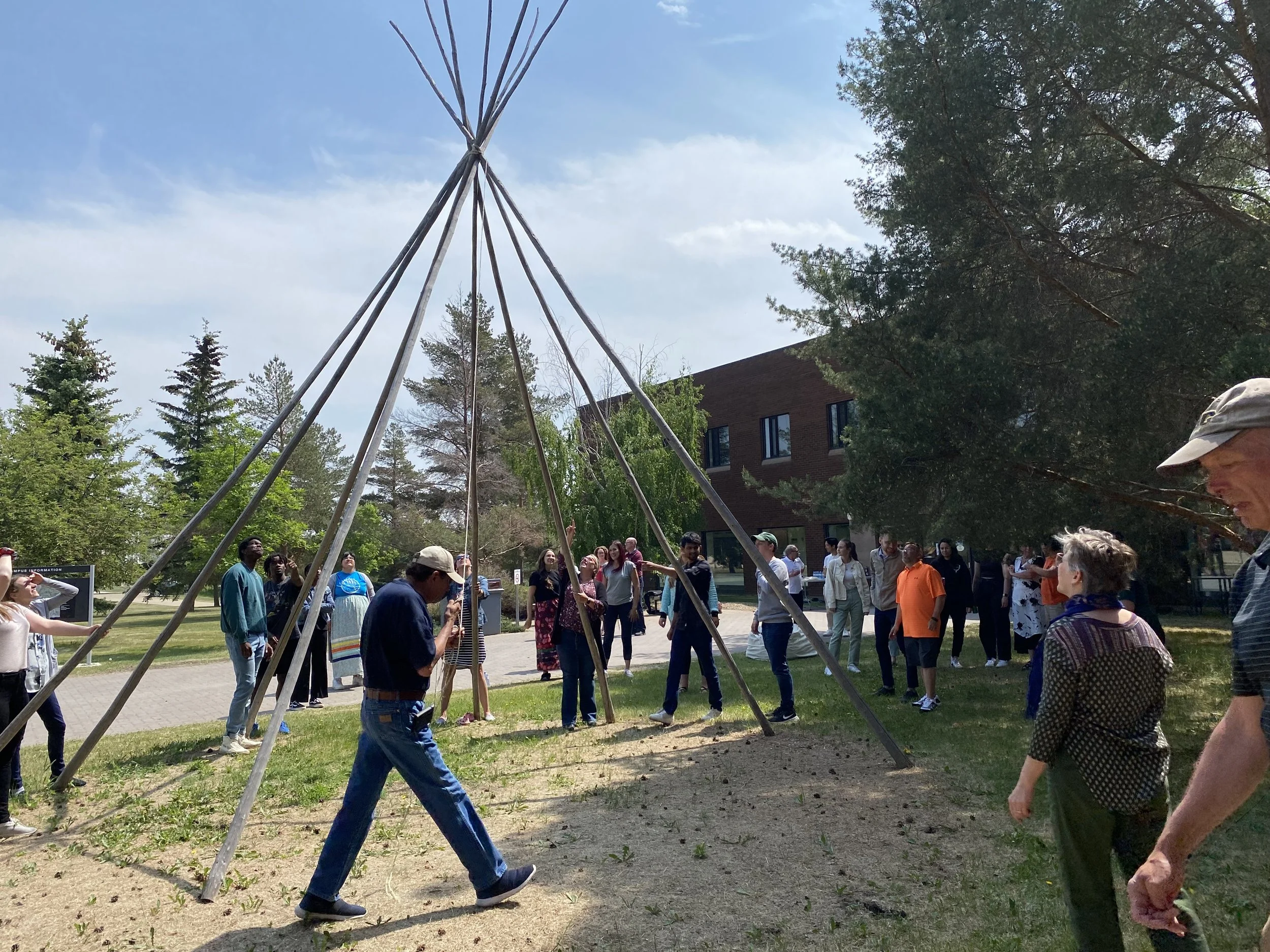
Indigenous Justice Research:
Prison Programming & Community Re-entry Experiences
In Canada, one in three incarcerated people are Indigenous, despite making up only 5% of the general population. I work as part of a larger team called the University of Alberta Prison Project. Since 2016, we have interviewed over 2000 incarcerated people about prison life and re-entry. My research explores our Indigenous participants’ experiences, who make up roughly half of our interviewees.
My approach mixes Western-style qualitative methods with Indigenous research methods, centring participants’ knowledge and self-determination. I also engage in debates around decolonization, but remain skeptical of academic efforts to define it. From an Indigenous research methods standpoint, academics are not the authority on what is decolonial - such decisions rest with specific nations.
In this area, I aim to produce research that helps empower Indigenous people and communities. Much of my work responds directly to the Truth and Reconciliation Commission’s Calls to Action. I am also working with Elders, Indigenous researchers, and prison staff to develop community-based cultural supports for system involved people. See this recent video for a summary of my work, hosted by the UBC learning circle.
Current study: community re-entry experiences (2022-2028)
Our current study, led by Dr. Sandra Bucerius, involves a randomized sample of 33% of the currently incarcerated people in Alberta’s provincial prison population (approximately 1250 people). Roughly 60% of our participants identify as Indigenous.
Using a mixed-methods, longitudinal design, we examine barriers to reintegration and the factors that support successful re-entry, as defined by participants themselves. We interview participants upon release and follow them over their first year after leaving prison, with interviews planned for 2 weeks, 2 months, 4 months, 6 months, and 12 months post-release.
The study’s broad scope allows us to examine how factors such as housing, employment, social connections, and health shape re-entry experiences, while enabling comparisons across demographic groups. Together, this project provides the first large-scale evidence on how people experience re-entry over time in Canada.
With a randomized sample of this scale, we are hopeful this study will inform re-entry policy and improve supports for people leaving prison in Canada. This research is in progress and please get in touch if you want to learn more. This project is supported by a SSRHC Partnership Grant.
Indigenized prison programming research (2016-2023)
Since the 1970s, Canadian prisons have introduced “Indigenized” programming and resources, such as courses teaching Indigenous cultures and colonial history, Elder visits, ceremony in prison, and “healing lodges,” which are specialized prisons informed by aspects of Indigenous cultures and traditions. These initiatives were born out of resistance by the prisoner-led Native Brotherhood and Sisterhood Movements, and Indigenous communities continue to push for greater control over how these programs are governed and delivered today.
I have published two papers in Crime and Justiceand Incarceration exploring Indigenized prison programs and what it means to “decolonize” prisons. Drawing from in-depth interviews, I show how cultural programming can help empower system-involved people. I argue that such resources are an Indigenous rights issue tied to health and cultural safety. While the prison is a colonial institution and efforts to Indigenize it are inevitably flawed and partial, these initiatives support the urgent needs of incarcerated people and represent ongoing resistance to Canada’s colonial justice system.
This work directly challenges prominent scholars who argue that Indigenized programming is a genocidal practice comparable to residential schools. These scholars, I contend, over-rely on academic theory while disregarding important Indigenous viewpoints and community advocacy, such as the perspectives of Indigenous peoples affected by incarceration, as well as explicit recommendations by the Native Brotherhood and Sisterhood Movements, the Truth and Reconciliation Commission, and the National Inquiry into Missing and Murdered Indigenous Women and Girls - all of which call for improved and expanded cultural resources. For a short summary of this work, click here.
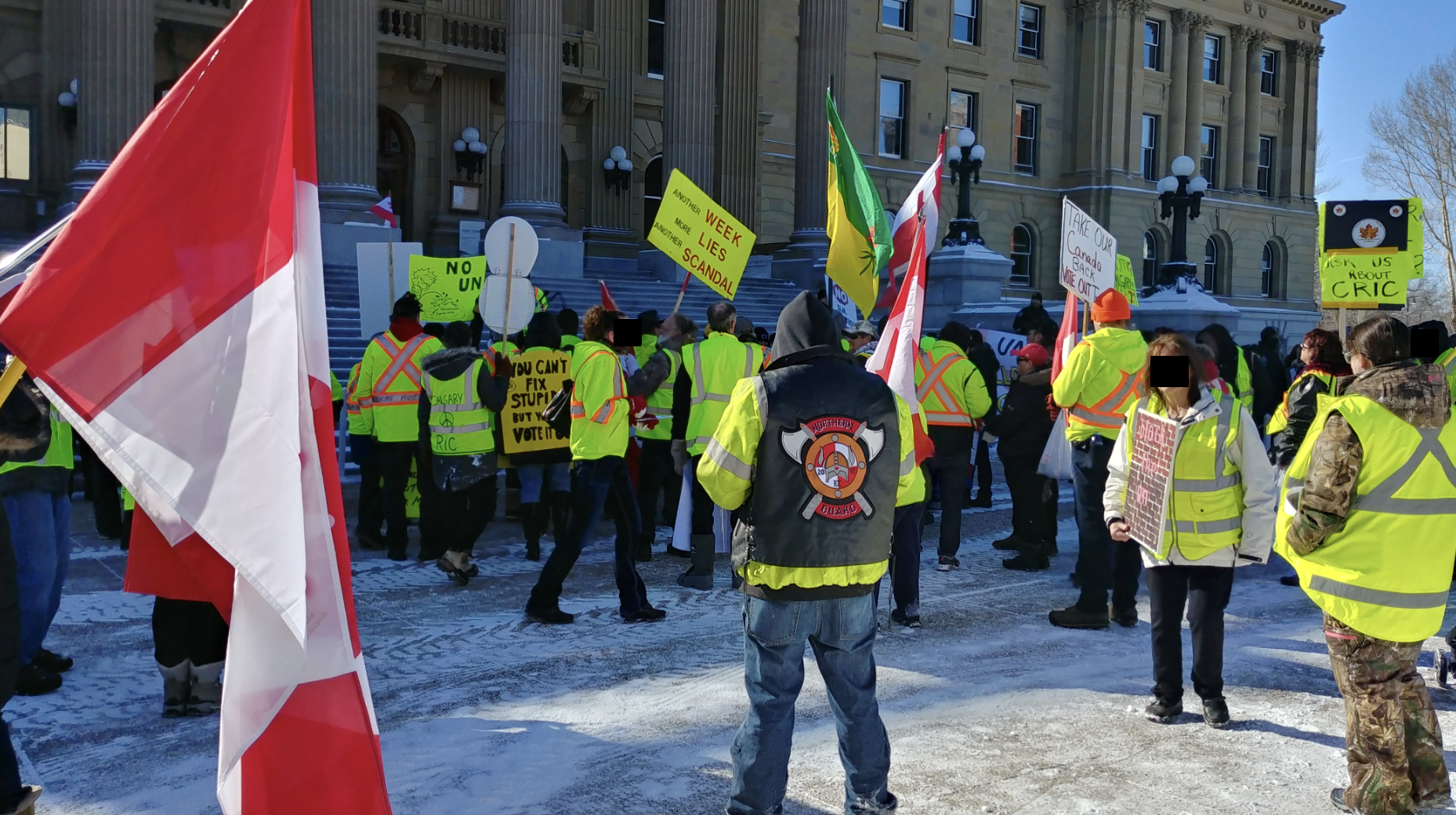
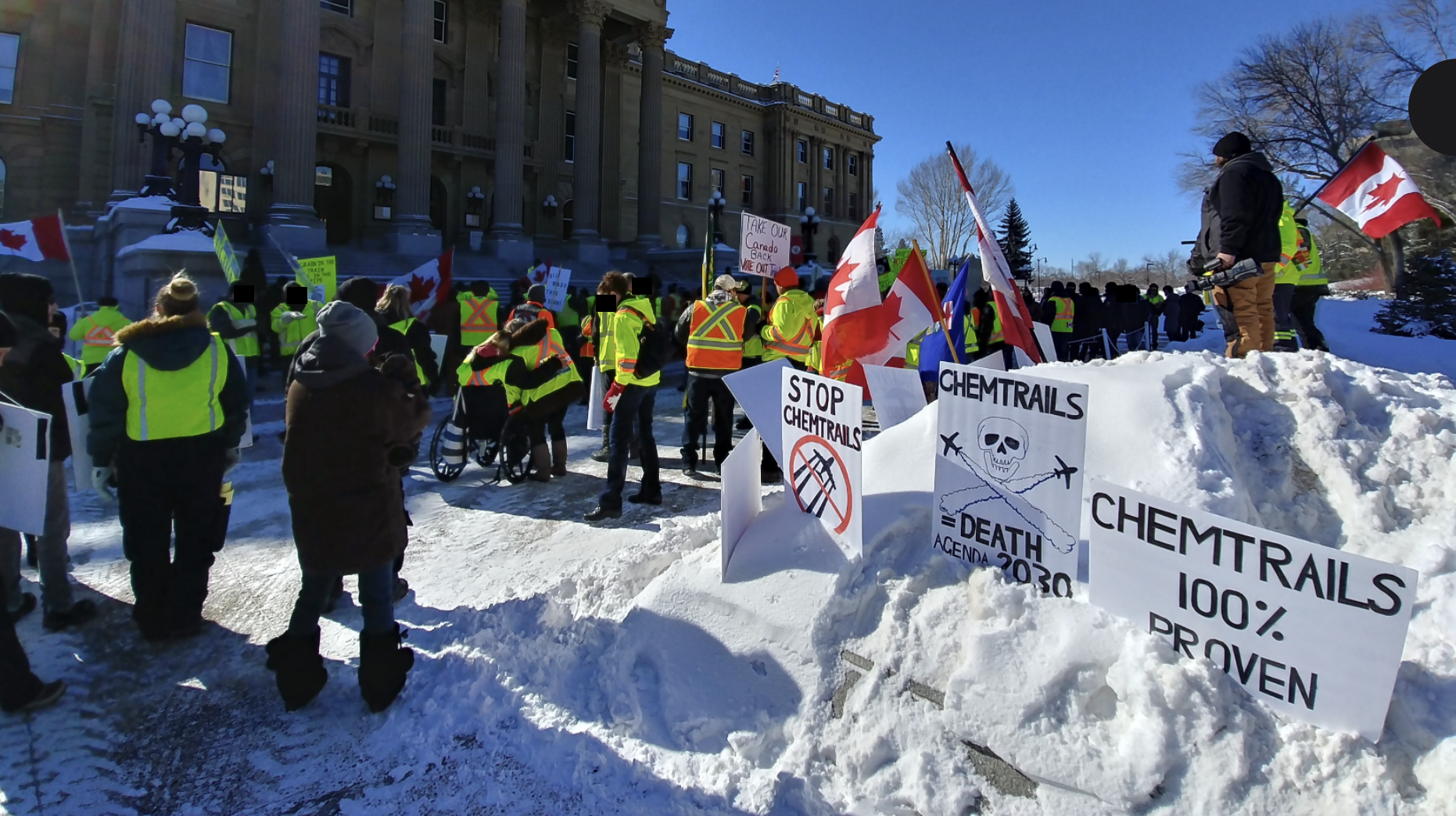
Social Movement and Political Extremism Research
My second research area concerns social movements, populism, and extremism, focusing on right-wing politics and nationalism. Across this work, I develop a methodological critique of "far-right studies," a field shaped by counter-terrorism frameworks and security-oriented political science. Using ethnographic methods including participant observation and in-depth interviews, I take a sociological approach examining how far-right ideas and movements can be embedded in dominant political culture, blurring conventional distinctions between “extremism” and “the mainstream”.
Current project: Alberta independence | German populism and the AfD (2025-2028)
Working with Drs. Sandra Bucerius and Katharina Leimbach, this project examines political disillusionment and national identity in Germany and Canada, involving in-depth interviews with supporters of the Alternative für Deutschland (AfD) and the Alberta independence movement. We are using a common interview framework across both samples, allowing for comparison across these distinct political contexts. This research is supported by a SSHRC Insight Development Grant.
Dissertation research: the Canadian nationalist movement (2016-2025)
My PhD dissertation is a semi-ethnographic study of Canada’s right-wing nationalist or “yellow vests” movement from 2016-2020. I interviewed 42 leaders and members of on-the-ground nationalist groups and conducted over 40 hours of participant-observation at 20 rightist political rallies. I approached these groups as a complete outsider.
This “up-close” research challenges dominant scholarship that reduces right-wing nationalism to a security threat or treats such politics as outside of Canadian culture. Instead, I situate these movements within broader cultural and political dynamics, showing how they often operate in continuity with, rather than in opposition to, the existing political order.
I have developed these arguments across several publications. In the British Journal of Criminology, I critique security-oriented frameworks that often reduce right-wing nationalism to a fringe crime problem. In Current Sociology, I challenge the use of “hate” as an analytic category in far-right studies, showing how it reduces politics to individual attitudes and emotions, distracting from the structural forces sustaining far-right movements. In Social Forces, I complicate claims that far-right politics are inherently “illiberal,” showing how activists mobilize liberal chauvinism to gain power. I argue that, rather than being an external threat, far-right movements often capitalize on liberalism’s ambiguities and contradictions.
My dissertation work was supported by a SSHRC doctoral fellowship and the Dr. Gordon Hirabayashi Graduate Scholarship in Sociology.
Other works
I have lent my expertise on extremism to Drs. Urbanik (Alberta), Maier (Winnipeg), and Greene (Athabasca) for a co-authored piece published in the British Journal of Criminology. Using a case study of attacks against unhoused Indigenous peoples in Lethbridge, Alberta, we argue that hate crime scholarship requires closer engagement with class dynamics and intersectionality.